Venice's Table: Flavours of the Lagoon
This guide introduces the essential flavours of Venice, from traditional dishes to seasonal ingredients. It also offers practical advice on where to find local food and how to ask hosts for their favourite spots.
By Aurunum editors · 26 Jan 2026 · 4 min read
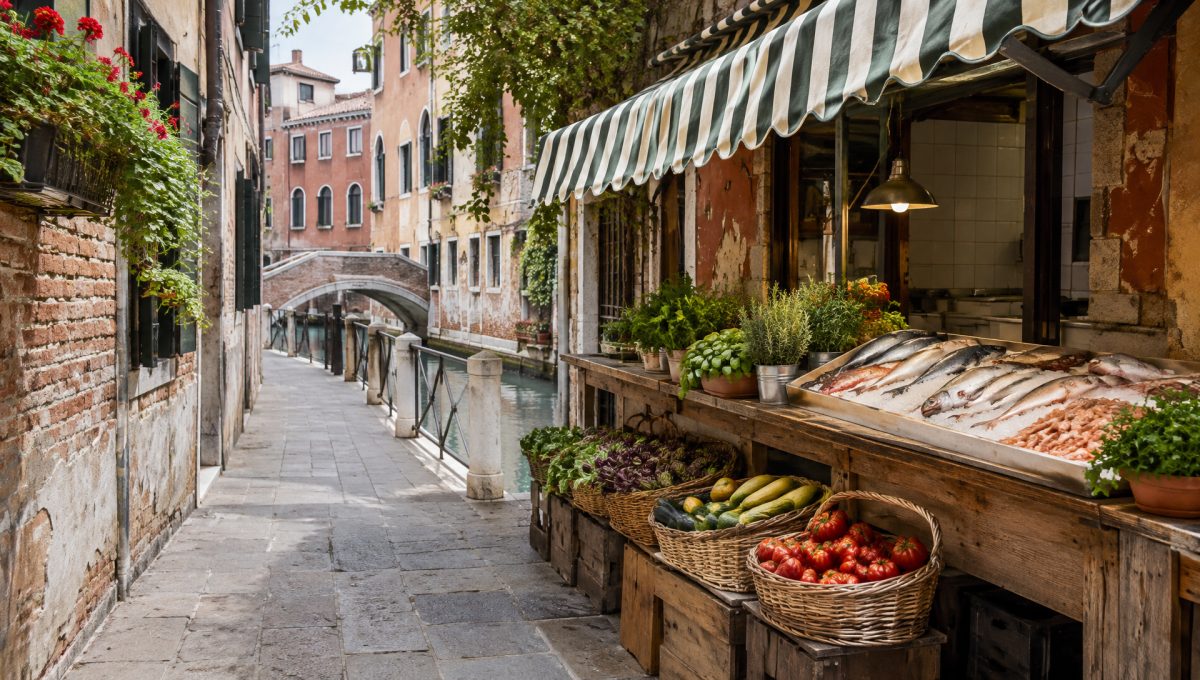
Staples of the Lagoon
Venice’s cuisine is shaped by its location on the lagoon, where seafood features prominently in daily meals. Dishes like risotto al nero di seppia, made with cuttlefish ink, and sarde in saor—sweet and sour sardines—reflect the city’s long maritime history.
Freshly caught fish, shellfish, and eel are common in markets and on menus, often prepared simply to highlight their natural taste. Polenta, a staple from the mainland, is frequently served with fish stews or as a side to rich meat dishes.
Many locals still enjoy a midday meal of risotto or pasta, often followed by a light dessert such as tiramisu or a slice of pandoro, a sweet bread traditionally eaten at Christmas.
Ingredients That Define the Region
The Veneto region supplies much of the produce used in Venetian cooking, including rice from the Po River delta, which is essential for risotto. The area’s vineyards also contribute to the local palate, with wines like Prosecco and Soave often paired with meals.
Herbs such as rosemary, sage, and wild fennel grow in the surrounding hills and are used to season meats and fish. Preserved lemons, capers, and anchovies are also common, adding depth to sauces and antipasti.
Local dairy products, including soft cheeses and ricotta, appear in both savoury and sweet dishes. These ingredients are often found in small shops and markets throughout the city.
Markets and Local Food Culture
The Rialto Market is a long-standing food market in Venice, where vendors sell fresh fish, vegetables, fruits, and spices. It’s a place where daily life unfolds, and visitors can observe how food is selected and prepared.
Smaller neighbourhood markets can be found in Cannaregio and San Polo, offering a quieter experience and a chance to speak with vendors who may share tips on how to prepare certain dishes.
Many hosts in Venice are happy to recommend nearby food shops or seasonal treats. Asking about local favourites can lead to unexpected discoveries, especially during festivals or quieter months.
Seasonal Flavours and Quiet Times
In spring, fresh asparagus and young vegetables appear in dishes, often served with seafood. Summer brings ripe tomatoes, peaches, and melons, while autumn sees the arrival of mushrooms and chestnuts.
Winter is a time for hearty stews and slow-cooked meats, often enjoyed in the warmth of a home or a small trattoria. The city’s slower pace during this season makes it a good time to explore food traditions at a relaxed rhythm.
The quieter months of January and February offer a chance to experience food culture without crowds, and some hosts may share family recipes or homemade preserves during this time.
Good to know
- Visit the Rialto Market early in the morning to see the freshest seafood and produce.
- Ask your host for a local recommendation on where to buy bread, cheese, or wine.
- Look for small shops and stalls that sell seasonal ingredients, especially in Cannaregio and San Polo.
- Try a simple meal of risotto or polenta at a neighbourhood spot, rather than a tourist-focused restaurant.
- Keep an eye out for local specialities like frittelle di riso or bigoli in salsa during your stay.
- Bring a small container to take home any extra olives, cheese, or preserves you buy from a market.
- Avoid eating in the main squares during peak hours if you prefer a quieter meal experience.
Questions and answers
What are the most typical dishes to try in Venice?
Look for risotto al nero di seppia, sarde in saor, and bigoli in salsa. These dishes highlight the city’s seafood and seasonal ingredients, and are often served in homes and local eateries.
Where can I buy fresh food in Venice?
The Rialto Market is a long-standing food market in Venice, where vendors sell fresh fish, vegetables, fruits, and spices. Smaller markets in Cannaregio and San Polo also offer fresh produce and local cheeses.
Can I get food recommendations from my host?
Yes, many hosts are happy to share their favourite local spots or suggest seasonal dishes. They may also offer homemade treats or tips on where to find authentic ingredients.
Are there any food traditions tied to the seasons?
Yes, spring brings fresh vegetables and young fish, summer features ripe fruit, autumn has mushrooms and chestnuts, and winter is for hearty stews and preserved foods.
Stays mentioned in this story
Bed and breakfast in the historic centre of Venezia
Venezia · Santa Croce
Bed & breakfast
From €173 night
- Restored bed and breakfast with pool in VeneziaPhoto 1 of 5


Restored bed and breakfast with pool in Venezia
Venezia · San Marco
Bed & breakfast
From €115 night
- Bed and breakfast with terrace in VeneziaPhoto 1 of 5


Bed and breakfast with terrace in Venezia
Venezia · Station Area
Bed & breakfast
From €75 night


Destination guides
More travel stories
Food and wine
Harvest Days in Lake Garda: Olives, Grapes and Country Life
This article explores the sensory richness of harvest season in Lake Garda, highlighting the rhythms of olive and grape picking, local food traditions, and the appeal of country stays.
27 Nov 2026 · 4 min read
Food and wine
Flavours of the Itria Valley: What to Taste in Apulia
This guide introduces the core dishes and ingredients of the Itria Valley, highlighting how food is woven into daily life and local culture. It offers practical advice on experiencing authentic tastes through markets and conversations with hosts.
27 Nov 2026 · 4 min read
Food and wine
Harvest Days in Itria Valley: Olives, Grapes and Autumn Traditions
This article explores the harvest season in Itria Valley, highlighting the traditions of olive and grape picking, seasonal food, and the charm of rural stays. It also introduces local markets and cultural events that unfold in November across the region.
23 Nov 2026 · 5 min read
* Written with the help of AI and checked by the Aurunum editors before publication. Checked by the editors on 25 Nov 2026
* AI-generated image